
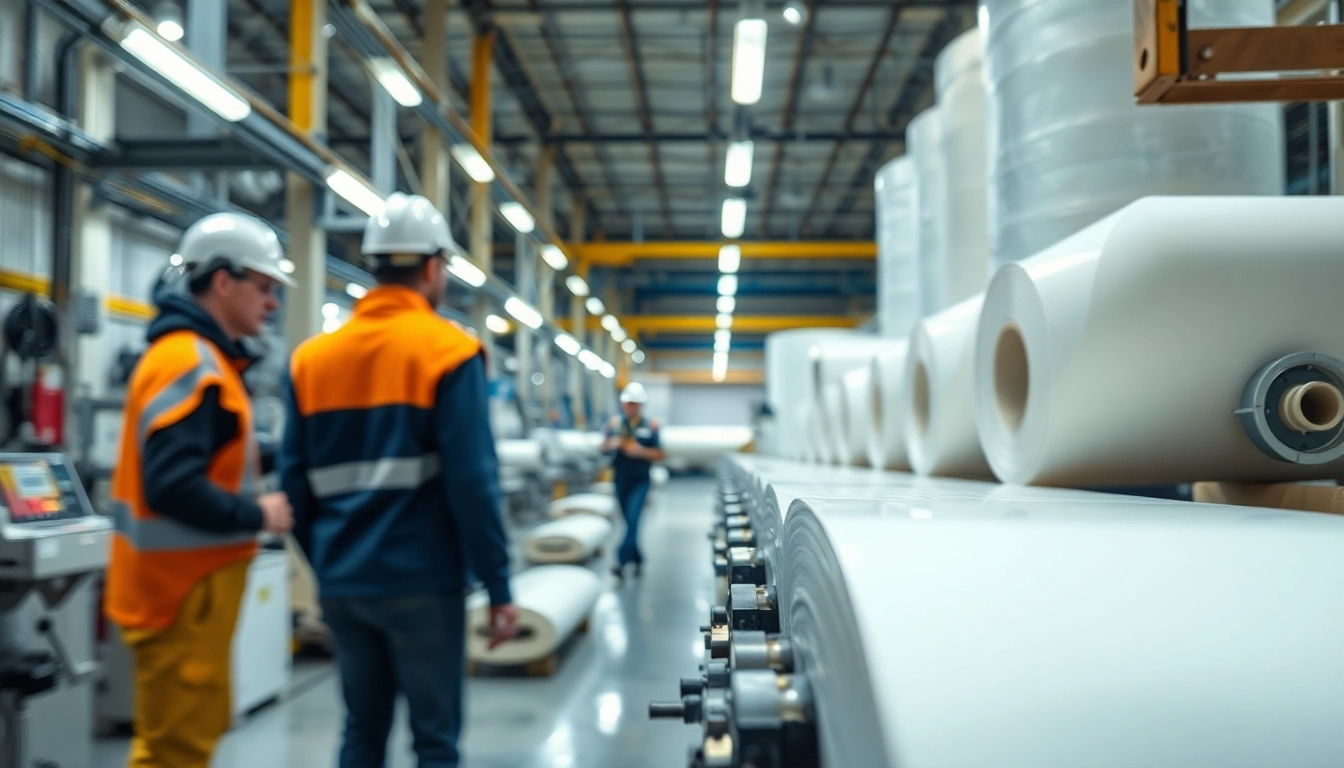
What is a GRP Manufacturer?
Definition and Importance
Glass Reinforced Plastic (GRP) manufacturers specialize in the production of composite materials that integrate glass fibers into a polymer matrix. This innovation results in products that are not only lightweight but also possess remarkable strength and durability. The significance of GRP manufacturers in various industries cannot be understated, as their products are pivotal for applications ranging from construction to automotive and aerospace sectors. Furthermore, the technique of enhancing plastic with glass fibers opens avenues for designers to push the boundaries of creativity, giving rise to unique and functional designs.
Key Materials Used in GRP Manufacturing
The core components of GRP include glass fibers and a resin matrix—typically unsaturated polyester, epoxy, or vinyl ester resins. Glass fibers provide tensile strength, while the resin matrix binds the fibers and protects them from environmental factors. Various additives can also be included to confer specific properties such as flame resistance or UV stability. The selection of materials is crucial, as they directly affect the performance characteristics of the final product, making it essential for manufacturers to maintain stringent quality control measures.
Applications Across Industries
GRP products are utilized in a multitude of applications due to their versatility. In the construction sector, they are used in roofing systems, wall panels, and structural components, particularly in environments requiring corrosion resistance. The automotive industry employs GRP for its lightweight characteristics, leading to enhanced fuel efficiency. In marine applications, GRP is favored for boat hulls and fittings, while aerospace manufacturers seek out GRP materials for components that require a high strength-to-weight ratio. The adaptability of GRP allows it to serve not just these sectors but also energy, telecommunications, and more.
Benefits of Choosing a GRP Manufacturer
Durability and Strength
One of the predominant advantages of GRP products is their exceptional durability and strength. Unlike traditional materials such as wood or metal, GRP is resistant to rust, rot, and corrosion, making it suitable for outdoor use and extreme environments. This longevity translates into less frequent replacements and maintenance, thus ensuring a higher return on investment over time. For projects in harsh conditions, opting for GRP not only prolongs the lifespan of components but also enhances safety and reliability.
Customizability of Products
GRP manufacturers often offer customization options that cater to specific project needs. The nature of composite materials allows for variations in color, texture, and mechanical properties, enabling designers and engineers to create bespoke solutions. Whether designing complex shapes for aerodynamics in the automotive sector or tailored aesthetic finishes for architectural projects, the flexibility of GRP supports innovation. This bespoke capability is key for businesses looking to differentiate their products in competitive markets.
Cost-Effectiveness Over Time
While the initial investment in GRP may be higher compared to traditional materials, the long-term economic benefits make it a cost-effective choice. The durability and low maintenance associated with GRP lead to reduced operational costs over time. Moreover, the lightweight nature of GRP can result in decreased transportation expenses and installation costs. Thus, when evaluating the total lifecycle cost of materials, GRP often emerges as the more economical option, particularly for large-scale projects.
Common Challenges Faced by GRP Manufacturers
Material Sourcing and Quality Control
One of the most significant challenges confronting GRP manufacturers is the sourcing of high-quality materials. The performance attributes of GRP are heavily dependent on the quality of glass fibers and resin used. Ensuring consistent procurement from reliable suppliers while managing costs can be a balancing act. Additionally, rigorous quality control processes must be implemented to maintain standards and avoid defects in the final product, which requires investment in both technology and skilled personnel.
Technological Adaptation
The rapid pace of technological advancement presents both opportunities and challenges for GRP manufacturers. Adapting to new manufacturing technologies, such as automated production processes and advanced curing techniques, is essential for staying competitive. However, this transition can necessitate significant investment and training. Manufacturers must continually assess and align their capabilities with evolving industry standards to remain viable in a market increasingly driven by innovation and efficiency.
Labor and Training Requirements
The GRP manufacturing process is complex and often labor-intensive, necessitating skilled workers who understand composite materials. As new technologies emerge, the demand for ongoing training and upskilling becomes critical. GRP manufacturers must foster a culture of continuous learning to ensure their workforce can effectively operate modern machinery, adhere to safety regulations, and maximize production efficiency. Failure to meet these requirements can hinder product quality and operational reliability.
Innovation Trends in GRP Manufacturing
Advancements in Composite Materials
Innovation within the GRP manufacturing sector is rapidly evolving. Researchers are continually exploring new combinations of fibers and resins that enhance properties such as strength, flexibility, and thermal resistance. Recent developments include the integration of nanomaterials to further improve the mechanical strength of GRP while maintaining its lightweight nature. These advancements pave the way for applications in cutting-edge industries such as aerospace and automotive, where performance is critical.
Incorporation of Sustainability Practices
With increasing awareness of environmental issues, GRP manufacturers are embracing sustainability practices. This includes exploring bio-based resins, improving energy efficiency in manufacturing processes, and committing to waste reduction strategies. Some manufacturers are also investigating the potential of recycling GRP, leading to the creation of circular economies in the composites industry. Being proactive about sustainability not only enhances corporate social responsibility but also appeals to section of clients seeking eco-friendly solutions.
Future of Automation in GRP Production
The future of GRP manufacturing is likely to witness increased automation and smart manufacturing practices. Implementing automation can optimize production workflows, reduce human error, and improve safety measures. Technologies such as Artificial Intelligence (AI) and Internet of Things (IoT) are paving the way for predictive maintenance and real-time monitoring of production metrics. As automation becomes more prevalent, it can lead to significant cost savings, increases in throughput, and heightened competitive advantage in the market.
FAQs About GRP Manufacturing
What are the main uses of GRP products?
GRP products are primarily used in construction, automotive, aerospace, and marine applications due to their lightweight and robust properties.
How is GRP different from traditional materials?
GRP offers higher strength-to-weight ratios, better corrosion resistance, and more flexibility in design compared to traditional materials like metal.
Can GRP be recycled?
While traditional GRP is not easily recyclable, research is underway to develop more sustainable versions with better recyclability.
What factors influence the cost of GRP?
The cost of GRP is influenced by material type, manufacturing processes, labor costs, and project scale, making customization key for pricing.
How do I choose the right GRP Manufacturer?
Consider manufacturers with proven experience, quality certifications, and the ability to meet your specific project needs and timelines. For more information, explore a GRP Manufacturer that aligns with your requirements.