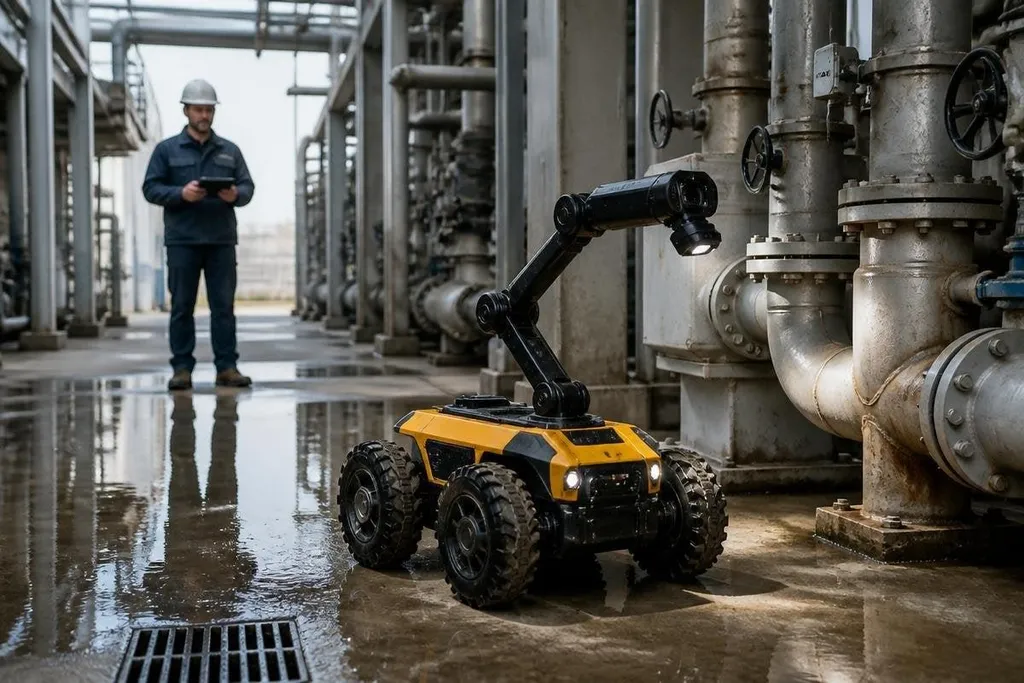
A maintenance robot can earn money in three ways: by doing physical work, by finding faults early, or by selling access to the system as a service. The strongest business case starts with a task that already costs a site time, injury risk, or equipment downtime.
- Physical work: cleaning, inspection, transport, or routine checks
- Useful data: finding wear, leaks, heat, corrosion, or blocked routes
- Repeat income: leasing the robot, charging per visit, or selling a service contract
The first sale is a task, not a robot
Maintenance covers very different jobs. A robot may inspect solar panels, scrub floors, check pipes, carry tools through a plant, or examine equipment in a place that people find hard to reach. Each job needs its own sensors, movement system, software, and safety plan.
That creates a clear opening for companies that design around one task. A robot built for pipe inspection needs cameras, lighting, and a way to move along or inside the pipe. A floor-cleaning robot needs a different body, route planning, and a way to handle people, doors, and loose objects.
The buyer is paying for a result. That result might be a cleaner floor, a record of equipment condition, or fewer hours spent sending staff into a risky area.
A general-purpose robot may sound useful, but a narrow product can be easier to sell because its work is easier to measure.
Data can become the second product
A maintenance robot can collect images, temperature readings, vibration data, or location records while it works. The data matters when it helps a team decide what to inspect, repair, or replace next.
This changes the sale from a machine purchase to an ongoing service. A company may pay for scheduled inspections, a dashboard, alerts, and reports instead of buying hardware outright. The robot then becomes part of a monthly contract built around site visits and maintenance records.
The data still needs review. A camera can record a damaged surface, but a technician may need to confirm the cause and decide how soon to act. Any company selling this service needs a clear process for false alarms, missed faults, data storage, and human approval.
A company pricing a maintenance-robot service needs the machine, supplier, deployment setting, and payment model in view. Reports from Robot24.com can add those details before the supplier chooses how customers will pay.
Suppliers can lower the first purchase barrier through several service models:
- Lease the hardware while the supplier handles repairs and software updates.
- Charge per inspection when work happens on a fixed schedule or after a customer request.
- Sell a site contract that covers robot visits, reports, and technician review.
- Offer a paid pilot with a defined task, time period, and success measure.
- License the software to a company that already owns compatible machines.
Each model shifts cost and risk between the supplier and customer. A lease gives the supplier recurring income but leaves them responsible for uptime. A per-visit service can be easier to price, though travel, setup, and site access still affect the margin.
Where the business case can fail
Maintenance robots work best when the environment is predictable enough for the robot to move and repeat its task. Stairs, clutter, poor lighting, narrow access points, water, dust, and changing work areas can add staff time that the sales pitch leaves out.
Integration can create another bill. The robot may need access to building maps, work-order software, charging points, safety systems, or a network that reaches the whole site. A company that sells hardware without planning this work may struggle to keep the customer after the first contract.
The open question is proof. A supplier needs records showing how many inspections were completed, how often the robot stopped, which faults it found, and how people acted on those findings. A polished demonstration can't answer those questions.
A practical buying checklist
Before paying for a maintenance robot service, check these points:
- Name the exact task and the area where it will run.
- Set a measure for useful work, such as inspections completed per shift.
- Ask who reviews the robot's findings and who approves repairs.
- Price charging, mapping, network access, staff time, and site changes.
- Read the contract rules for missed work, damage, data, and repairs.
I'd start with a paid pilot on one repeatable task, then expand only after the records show that the robot saves more time or risk than it adds. The first contract should answer one number: what does each completed maintenance job cost with the robot, compared with the current method?